
Mae Klong Railway Market
The narrow, crowded, market street is divided down the middle by old train tracks in a brick lined roadbed. An 8-inch curb leads up to a sidewalk, maybe 5 feet deep, where vendors have tables and baskets of everything from trinkets to vegetables. A woman sits on the ground, huge knife in hand, cutting fresh fish in preparation for sales. Imagine a crowded street fair market and you have a pretty good picture of this one street.
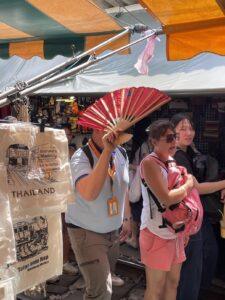
Now, imagine a train running right down the tracks in the middle of the road.
A whistle blows, a man walks through the crowd, announcing the train’s arrival.
Vendors pull awnings up, push baskets and tables behind the red line on the sidewalk and people, shoppers, find a place to stand, not quite as far back as they should be but heck, nobody wants to miss the front row experience. Eventually, everyone will move behind the red line.
Before the whistle, it’s a crowded market street. Less than five minutes later, the train is moving down the track oh-so slowly. Another two minutes go by, the train has passed and everything is reset to pre-whistle market.
And it happens eight times a day, as if it were perfectly normal, because here, it is normal for the Mae Klong Railway Market.
After 10 days in Thailand, here is my list of noteworthy things that are normal here but different for me.
Napkins
What appear to be normal tissues (like Kleenex) are used for napkins at restaurants. There will be a decorative box on the table and the tissues can be pulled as needed. Being tissues, it takes quite a few to get through a meal if you are making the big mistake of using your fingers to assist in directing your food to your fork. Maybe that’s one reason the tissues don’t appear to be noteworthy to Thai people. Their fingers do not touch the food.
Utensils
Spoon and fork are the standard utensils at the dining table. The fork is used to guide food to the spoon. The spoon carries the food to the mouth. The spoon is big, what I would call a tablespoon, which is what threw me off on the protocol. It makes sense to have a bigger spoon when you are loading it with rice noodles, veggies and meat. It delivers quite a mouthful.
Rideshare
UBER does not appear to be an option in the three places I have been, Krabi, Bangkok and Chaing Mai. Bolt is okay, Grab is better. I have been using Bolt and managed to not pay for one trip. The App asked if I want to pay in cash of card. The cash prices were much lower, so I selected cash. That’s not an option I had seen in UBER. When I went to leave the car, my brain was locked in on paying by card so I thanked the driver and exited. When I looked at the app to tip, I realized my mistake. I ended up transferring the $3 payment to the drivers bank. Not a mistake I will make twice.
Train Fare
There are tokens or paper tickets issued when you buy a ticket for the train. Fortunately, Brother Mai was there to provide training on this one. Keep the token or ticket handy, you will need it to exit the station! The token is a quarter sized plastic disk that you tap in with token at the turnstile to enter, then drop in slot to exit.
Room Checks
Room check is a normal part of the hotel check out, so allow extra time. After the payment is made and the paperwork complete, even if you prepaid, you will be asked to wait while staff checks the room. The time this takes depends on how busy they are and how far away your room is. There is technically nothing to stop you from leaving but it would be considered very rude.
TP in Trash Can
Toilet paper doesn’t go in the toilet in many parts of Thailand. Like much of Central America, the infrastructure can’t handle flushed TP so it goes in the waste basket. That can take some getting used to because it goes against what I have been accustomed to doing my whole life. The first time I encountered it, in Costa Rica, I really struggle to believe that was the rule and the norm. By the way, high end hotels have their own waste water treatment systems so it is possible to travel without ever running across this one. Trust me, it is not at all unusual in many parts of the world.
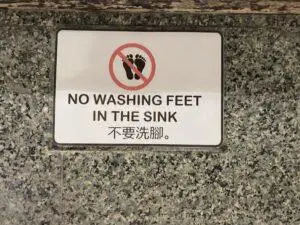
As a side note, there are signs in some bathrooms telling you it is not allowed to wash your feet in the toilet. Not something I had thought about doing, but good to know. Unfortunately, I only took a picture of the “don’t wash you feet in the sink” sign and didn’t capture the toilet sign.
The Pace
People, in general, do not seem to be in a hurry. Even when I am fumbling for money or slow to get into a car, I have not sensed impatience. Restaurant staff seem completely okay with standing and waiting while I try to select from so many menu items. It is only my discomfort at inconveniencing them that makes it awkward. At least, that is my impression. Maybe they are just good actors.
Temples
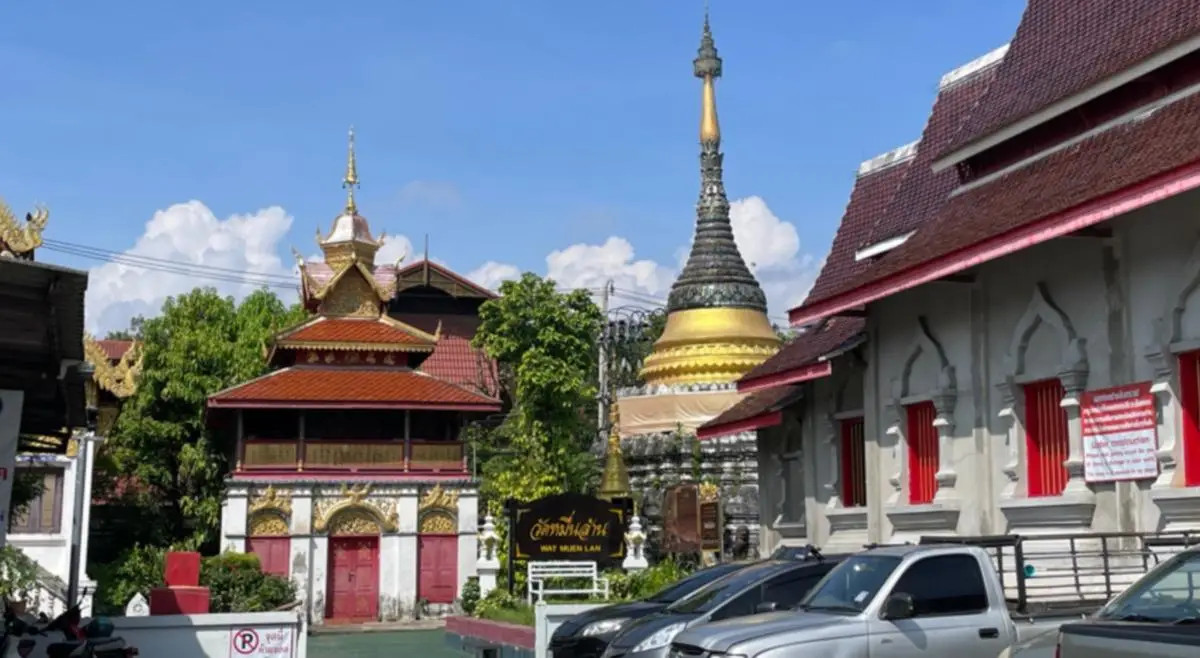
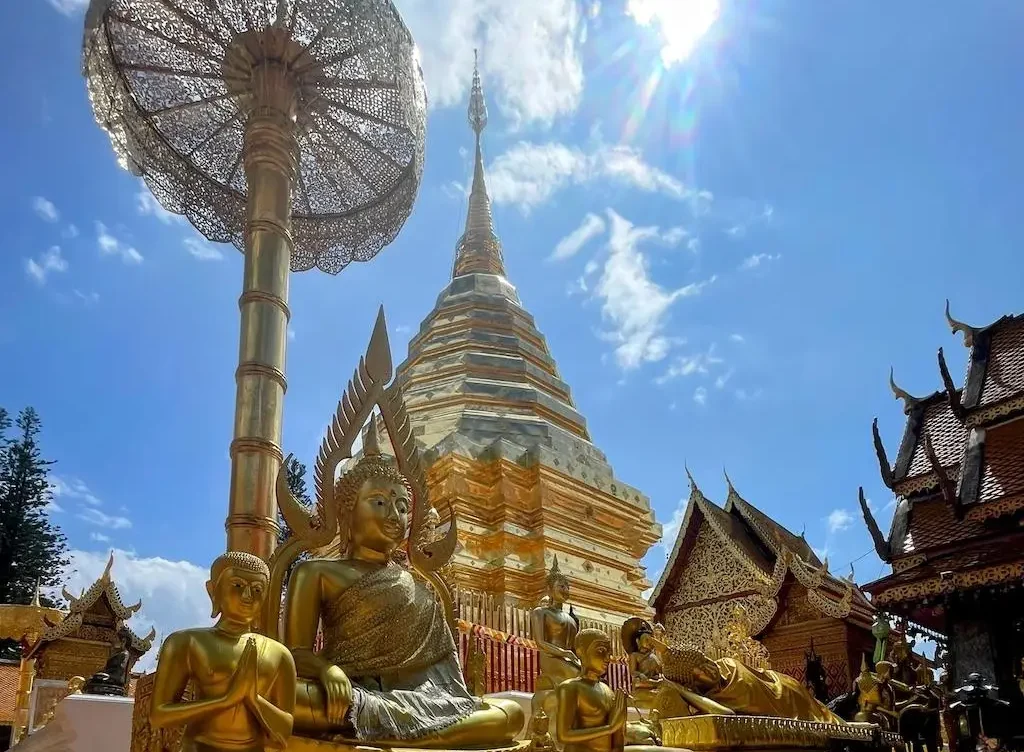
I have to add Buddhist temples to the list because there so many of them. It seems perfectly normal walk down a street and look up to find ornate, gilded temples decorating the skyline. There are also smaller shrines of all types but the quantity of temples, houses of worship, has surprised me. I don’t quite understand how the temples fit into Buddhism. That is something I hope to learn more about during my visit. The temples might stand our more because they are so tall and shiny. In a country that is geographically a little smaller than Texas, there are over 40,000 temples. Texas has over 30,000 churches, my point is made – there are lots of temples in Thailand.
Markets
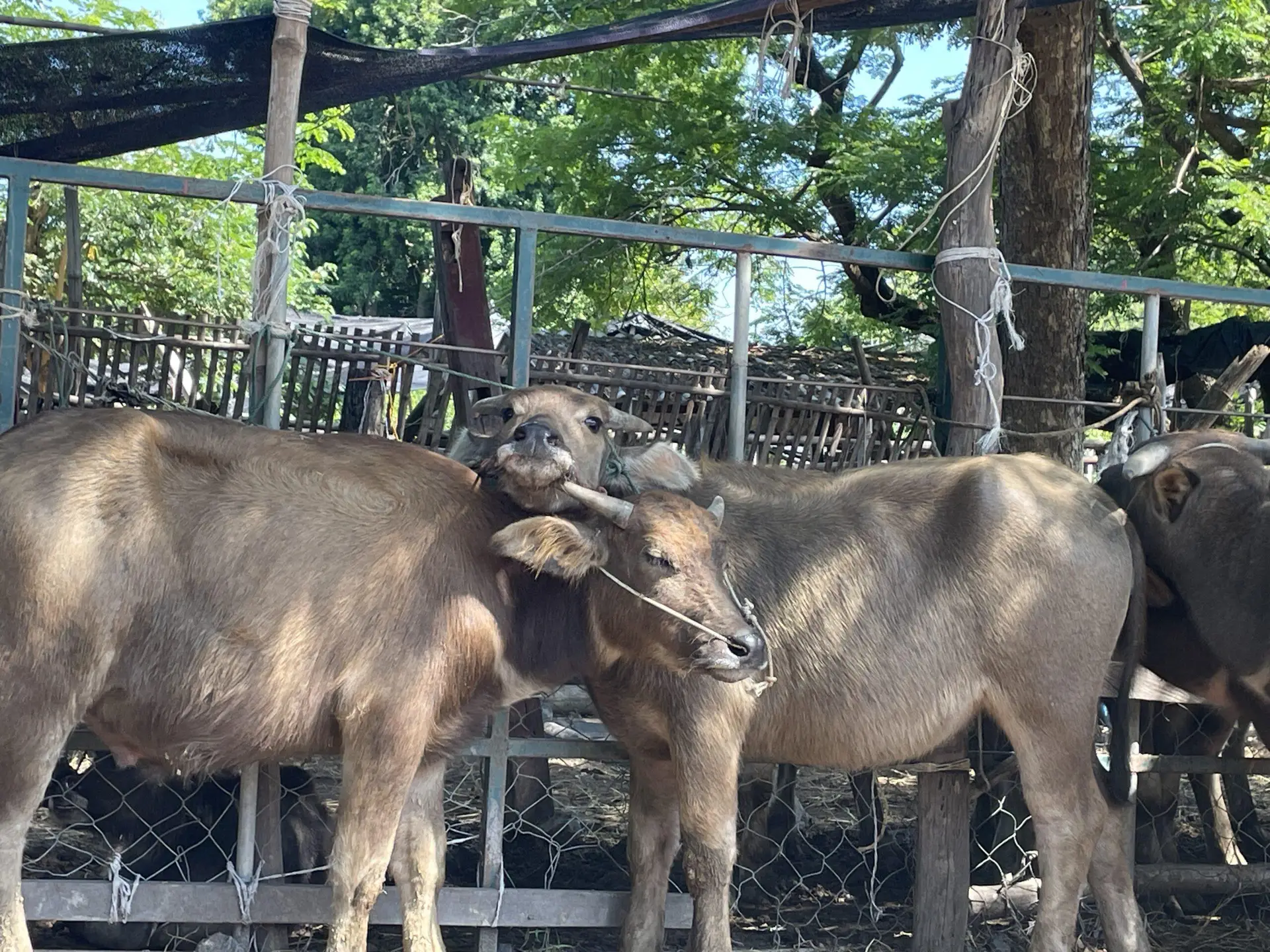
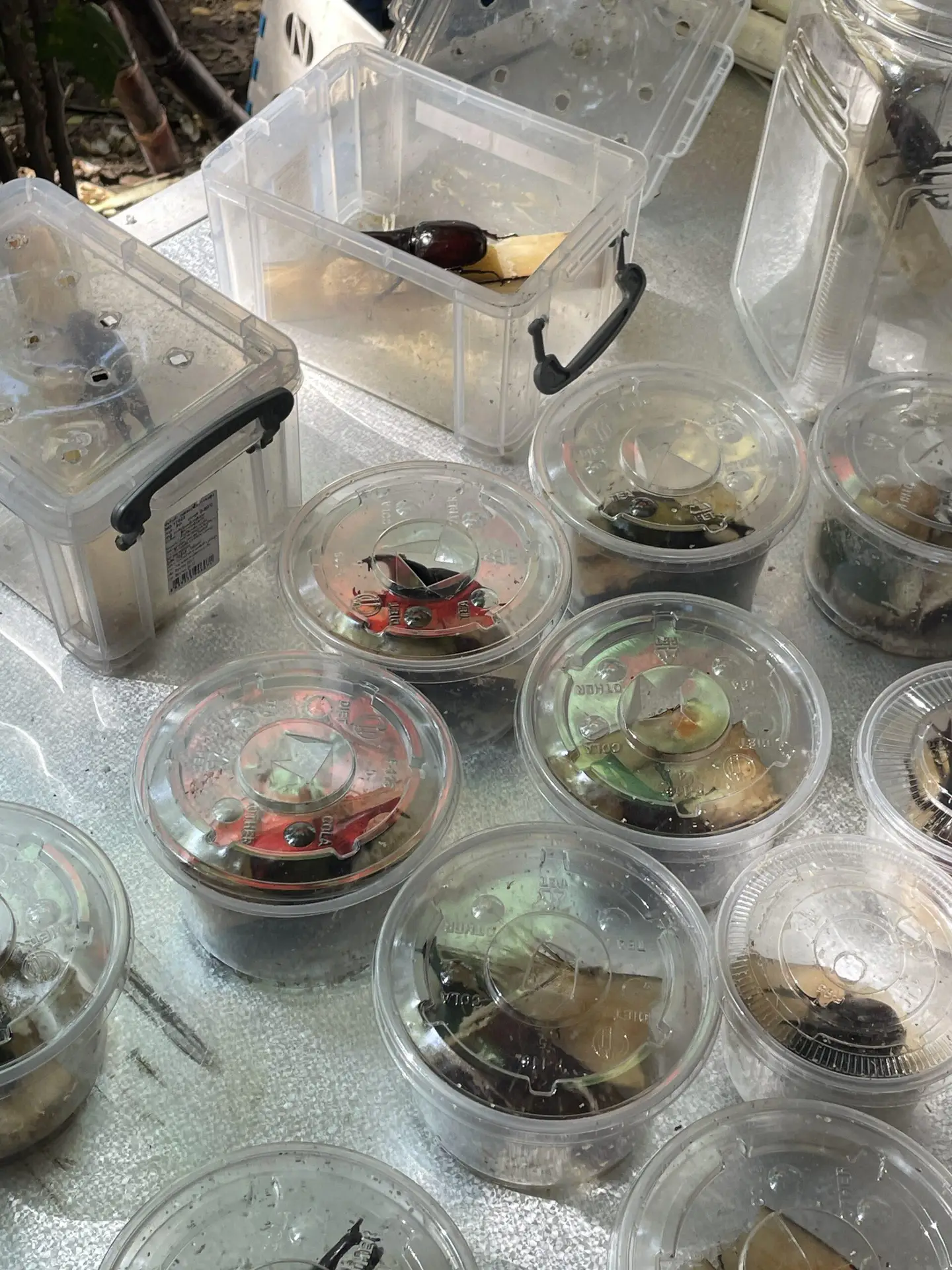
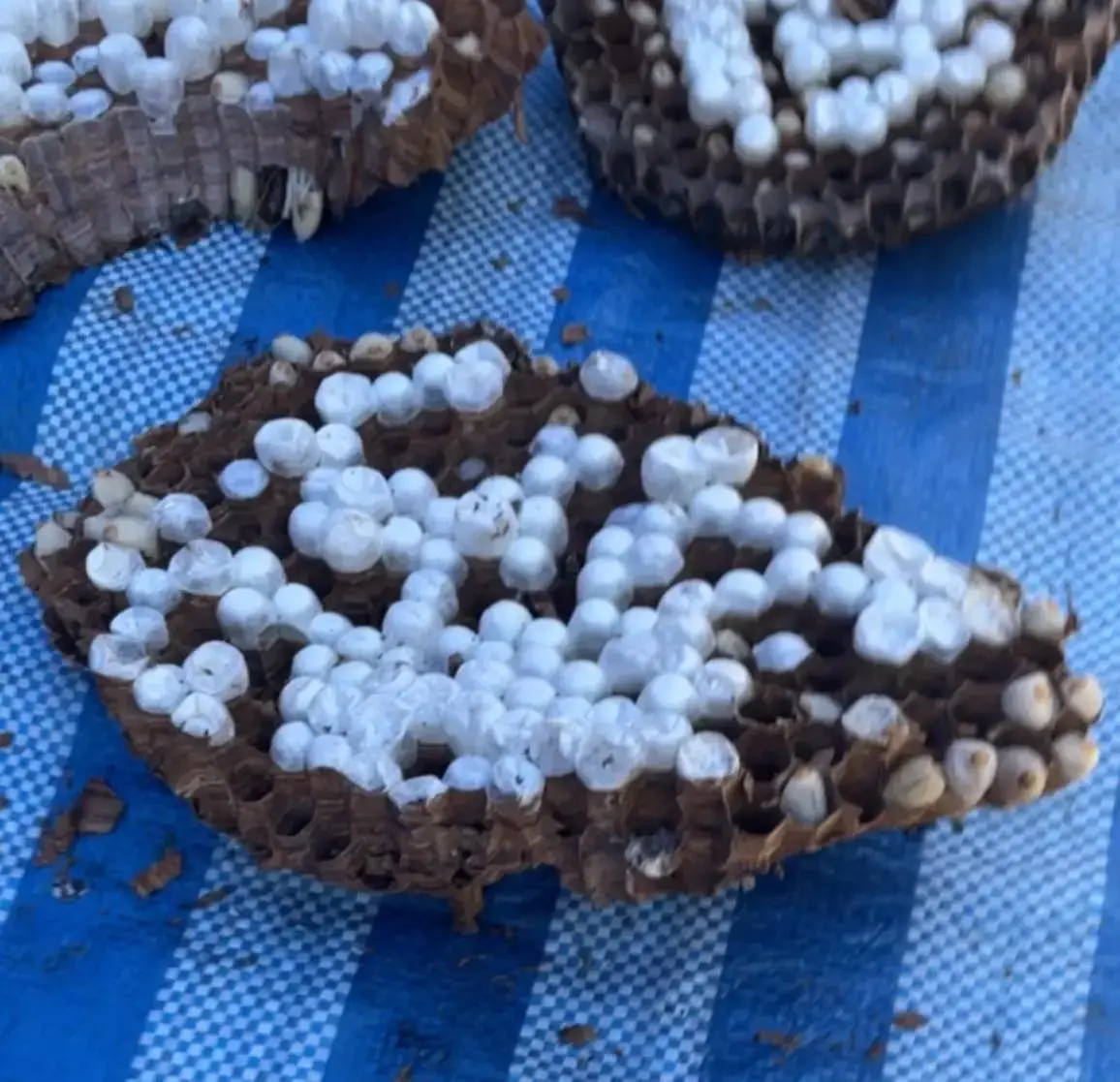
The list would not be complete without including the amazing variety of items for sale at the market. We went to the buffalo market in San Pan Tong today. In addition to the buffalo that were there for auction, there live fighting beetles (I was told it is the season) and live paper wasp larvae in the hive. There were live eels and crabs, dried fish, fruits and vegetables I am starting to recognize and so much more. I am sure I will learn more about these things over the coming weeks. For now, I am in awe and mostly sticking to my very basic diet of avocados, bananas, peanuts and pad Thai.
Happy travels!
Anne