 Arriving at the airport in Perth, the workaway host gave me instructions for how to meet him outside, telling me to simply look for the bright red Ut (pronounced yoot). Easy enough if you know what a Ute is. When I asked a nearby traveler, they made the obvious statement – you aren’t from here, are you!
When I finally climbed the red UTility vehicle, aka Ut, I met Kevin, my host. We had spoken during a video call two months earlier and I had felt confident it would be a good stay. As the actual arrival date neared, I had become a bit less sure and found myself wondering what I was getting into. “Close to Perth” turned out to be nearly an hour and a half southwest, in the middle of sparse farmlands with the closest town 30 minutes away by car. When Kevin stopped at a grocery store the edge of Perth and asked if I needed any food items, I really had no idea how to answer. My two previous workaway stays, one in remote Costa Rica and one in Xela, Guatemala, had not prepared me for the question. By the end of the three months in Australia, I would know exactly what food I would want to have on hand. In that moment, my desire to not impose was stronger than any concern over not getting fed.
After a quick stop at the Bottle Shop to buy wine, we were on our way to the farm. Driving through the sparse bush of a National Park where there were no houses and very few other cars, it struck me that I was completely dependent on my hosts. If the stay was completely unacceptable, I would need a ride from them to get to public transportation. There was no cell service at the farm so I was also dependent on them for access to wifi to even reach the outside world. In that moment, I had to choose between fear and faith. Had I made a mistake?
This bit of trepidation preceded each of the workaway stays during the 3 months in Australia. Stepping over the threshold of fear was an opportunity to either embrace the moment as a gift or withdraw and protect against potential discomfort. Having made the commitment to each stay, embracing the moment was the default, opening the door to so many wonderful experiences and people.
I politely asked about kangaroos and the trees, more to make conversation than interest during the long drive. Kevin shared local history and opinions. When we finally drove through the wide front gate of the farm, I was ready to settle in and curious to see what the weeks ahead would bring.
Pam met us at the house, moving between the many tasks that kept her busy every day. I was shown to the building that housed workaways and met two people who were scurrying to move belongings out of the room I was to occupy. they weren’t that keen to have me join them. Only later would the rest of the story be revealed. that first night, I had no clue what was going on.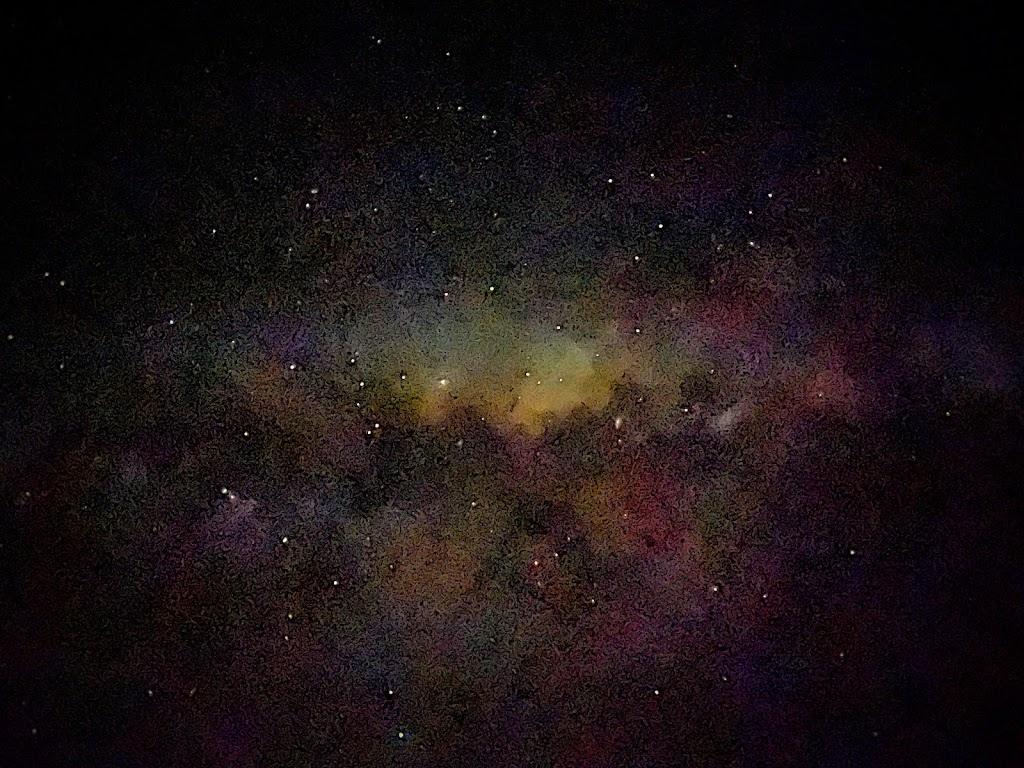
There was a quick dinner, we watched some sports on TV and a plan was made for the following morning. As I wandered outside to go back to the annex, I looked up to see the milkyway shining across a dark night sky. It was phenomenal. There was very little moonlight and the sky was clear. For the next three nights, I would go outside, just to stare up into the sky. After that, the weather became cloudy and the moon grew bright and the milkyway disappeared.
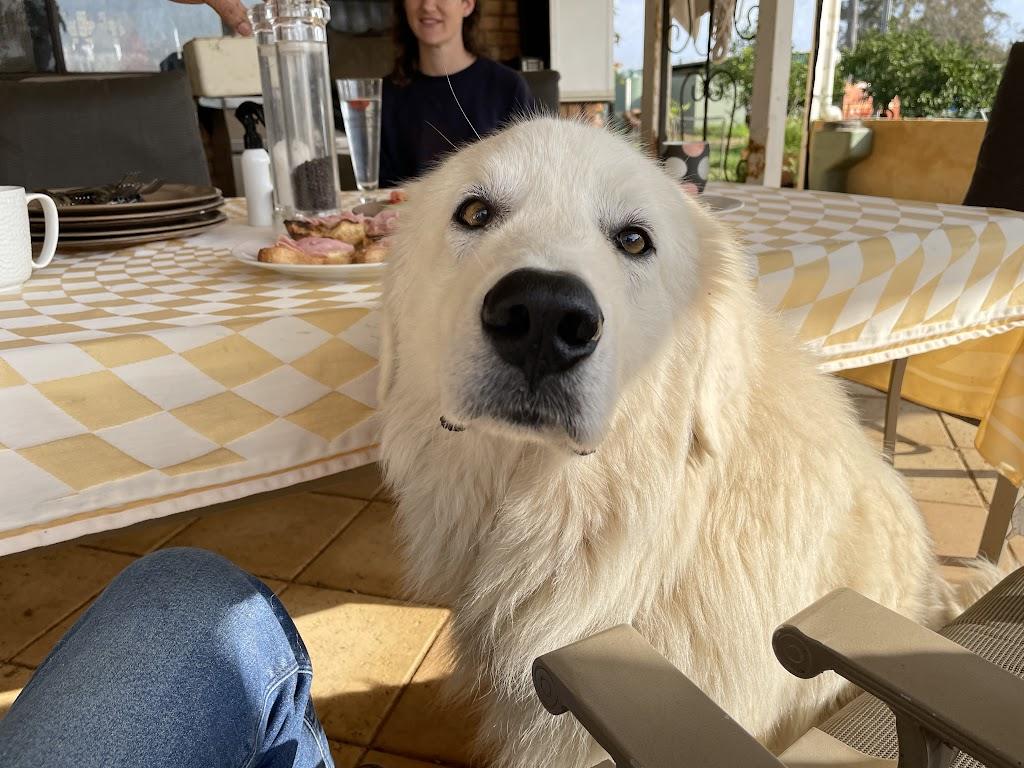
Day one on the farm started with a freshly made capacino from kevin along with a proper farm breakfast of eggs, fried tomatoes, toast, bacon and lots of conversation. the two maremma sheep dogs that were allowed in the house took a liking to me, to the surprise of the hosts. The dogs, while extremely loyal to the family, were known to bark relentlessly at strangers.
After breakfast, we started the daily chores. Pam showed me how to drive the RTV out to the paddock to feed the 100 or so free range chickens and collect eggs. This chore was done morning and afternoon to keep up with the eggs. Then we drove over to bottle feed the baby lambs and feed the piglets, also twice daily tasks, then a short drive to let other chickens out to forage and give carrots to the donkeys.
With the basic chores completed, we were on to the long list of tasks that were waiting for attention. that first day, the list included burying a dead hen along with a dead lamb, removing a skeletal rat from the Kubota tractor cab, scraping several inches of shit out of the pullet pens and collecting firewood.
It was cold. It was exhilarating. It was chaotic. I was having a blast! Dinner that night was a random collection of leftovers, followed by friendly conversation and more lessons in the rules of cricket or Aussie rules football while we watch sports on TV, a pattern that was repeated each weeknight evening.
In the morning, I learned how to prep the lamb bottles, and set off to complete the daily chores on my own. I learned about gate latches, how to keep the paddock maremma, Ruth, from escaping when I was struggling with the gate, and how to keep my hat on when I drove the RTV across the farm. The sound of the gallahs in the trees, the sight of the parrots in the sky and the wide open expanse of field and sky opened my heart and lifted my spirits.
Back at the farmhouse, I asked Pam for my next set of tasks. There is always so much work waiting to be done on a farm that the days passed quickly. Learning how things were done was easy because both Pam and Kevin gave clear instructions and seemed to have a lot of tolerance for good effort over perfect execution. There was no shortage of tasks for anyone willing to do the work.
I had commented early in our communications that I wanted to drive the tractor. My hosts made that a priority when they could have easily ignored the request to spend time on more urgent issues. A rat had died in the cab of the tractor so first order of business was to remove everything possible and clean the cab to get rid of the droppings and the smell. It was a big job because the rat had made a home in the cab and had been eating plastic and peeing in hard to reach places.
After hours of cleaning, the tractor was ready to go. Some of the paddocks could not be used for grazing because the fencing wasn’t adequate to keep the cows inside. those fields held mountains of nutritious and free forage that needed to be harvested and moved to the feed the cows in other paddocks. Let the fun begin! Pam hooked up the forage cutter to the tractor after a short struggle with the PTO. Behind that, the collection wagon was attached. The idea was that the forager would trough the cut grasses into the collector, making it it possible to gather the forage and move it, all in one pass. Unfortunately, the forager was missing one of its three belts and didn’t have enough power to shoot the wet grass far enough into the collector. Pam couldn’t go 50 feet without the grasses piling up and falling out onto the ground.
I offered to climb into the wagon and push the grass back to keep it from overflowing. The plan worked great except when the tractor drove over ground where the grass was short. In those stretches, dirt and gravel flew out the back, making it impossible to rake without getting a faceful of dirt. 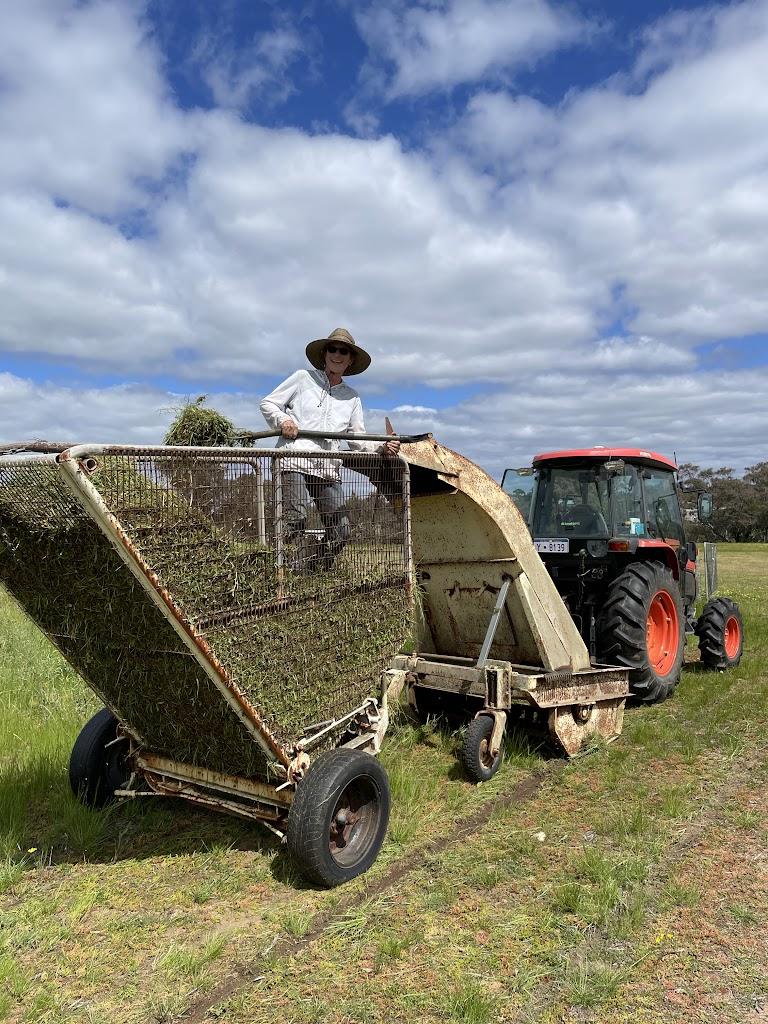
We eventually worked out the kinks and succeeded in delivery several loads to the hungry cows. In their eagerness to get to the fresh grass, the animals were not at all shy about crowding the wagon I was trying to manage. Not knowing their temperament, I found it intimidating to be surrounded by a growing crowd of pushing bovines who outnumbered and outweighed me. Pam’s reassurance was reinforced each time we delivered a new load of grass but the sense of alarm never quite went away.
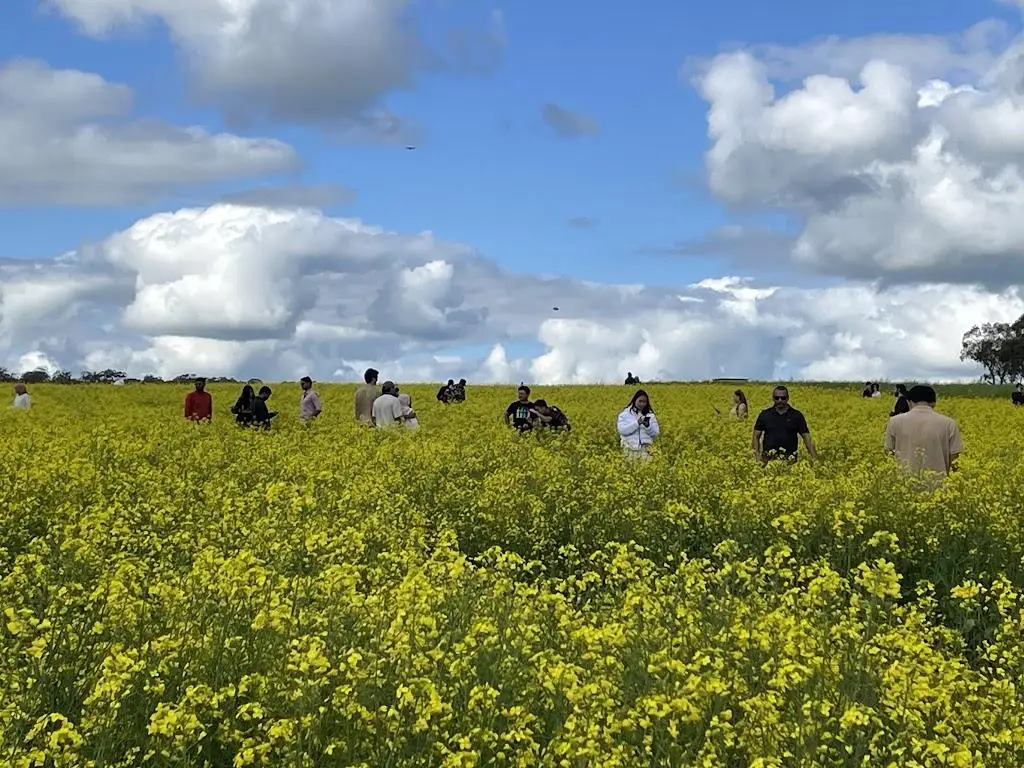
I had arrived on a Monday. Tuesday, I learned that my stay coincided with the annual canola event. Pam and Kevin had bought the 100 acre hobby farm after years of managing a motel and bar somewhere in the middle of Western Australia. The term “hobby farm” and 100 acres did not quite line up; 100 acres, 150 chickens, 50 cows, 4 alpacas, 2 donkeys and dozens of sheep meant unending work every day of every week all year long. On any given week, their retirement was anything but relaxed. Six weekends out of the year, the pace was catapulted into frenetic. On these weekends, 500 – 900 visitors paid a fee to go into the canola fields, pet some farm animals and picnic in the country. The income from these six weekends paid the bill and was the only income the farm generated. My stay would include two of those six weekends, adding even more diversity to the already interesting stay.
Friday afternoons were spent preparing for the guests that would flood through on the Saturday and Sunday. We cleaned the portapotties, put fresh bedding in the animal pens and herded the alpacas, donkeys and a fe sheep from the outer paddocks into the petting zoo pens. On Saturday morning, I was assigned to the area where eggs, local olive oil, handmade soap along with a few other craft items were sold. I would be working with the 12 year old grandson and his friend, both from Perth. Knowing about my background in sales and marketing, Kevin thought I might be able to teach the boys how to sell as well as how to actually work during the day. They were avid couch potatoes, not fond of outdoor work or talking with strangers.
The gate opened promptly at 10 am, allowing a long, steady line of cars to roll onto the farm road and into the few acres used for parking during the event. Still struggling to believe people would pay $15 each to walk though the field of flowers, I watched in amazement as the parking area began to fill.
The weekend passed quickly. There was always something to do, selling, answering questions about the farm, helping little ones pet the lambs and watching 100s of people dressed in all sorts of attire amble though the canola fields.
Monday morning we were back to regular chores – bottle feed three lambs, collect dozens of eggs, clean the pens, feed the donkeys, mow, collect firewood – all the daily tasks that never stop. I was having so much fun, I wanted to stay a couple more weeks. That wasn’t an option because I had committed to dog sitting all the way across the country in Hervey Bay. For now, I would log this as a most successful farm stay and put on the list of places to maybe come back to some day.